7-Day Thailand Itinerary: Bangkok, Chiang Mai, and the Andaman
A practical 7-day Thailand itinerary covering Bangkok, Chiang Mai, and the Andaman beaches — with destination, restaurant, and hotel picks for first-time travellers.
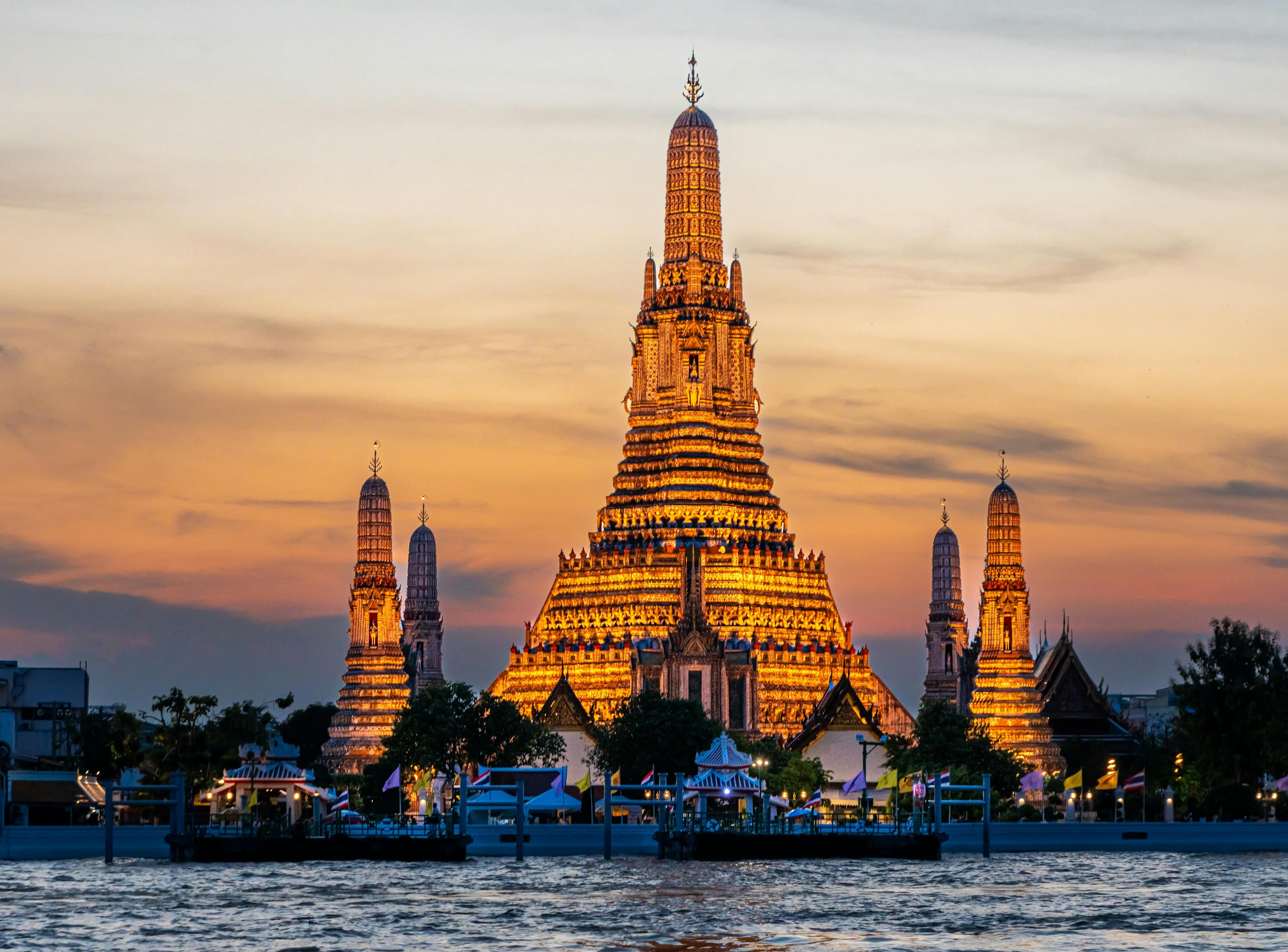
A 7-day Thailand itinerary works best as Bangkok (3 days), Chiang Mai (2 days), and either Phuket or Krabi (2 days), connected by short domestic flights. The route combines royal temples, northern hill country, and the Andaman Sea — Thailand's three most-cited regions, supported by a record 35 million visitors in 2024 [Source: Tourism Authority of Thailand, 2025].
Where Should You Start a 7-Day Thailand Trip?
Start in Bangkok. Suvarnabhumi (BKK) and Don Mueang (DMK) airports together handle nearly every international flight into Thailand, with direct service from London, Frankfurt, Madrid, Paris, and most major European hubs. Thailand welcomed 35,047,501 visitors in 2024, generating over 1.8 trillion baht (approximately $52.81 billion) in tourism revenue [Source: Tourism Authority of Thailand, 2025]. The country's visa-exemption policy now allows citizens of 93 nationalities to stay up to 60 days, removing a friction point that previously slowed Thailand trips.
From Bangkok, fly north to Chiang Mai (1 hour) for the cooler mountain region, then south to Phuket or Krabi (90 minutes) for beaches. Thailand's domestic network — Thai Airways, Bangkok Airways, AirAsia, Thai Lion — runs frequent flights between all three regions.
For a 7-day plan, treat each city as a stop, not a base. Book inter-city flights at least three weeks ahead for typical fares of €30–€80 each. The route below assumes Sunday arrival and Saturday departure.
What to See in Bangkok (Days 1-3)?
Bangkok rewards three days of exploration across the Grand Palace area, the Chao Phraya river, and the modern city. Build the visit around three loops: Rattanakosin (the historic island), the river and Chinatown, and Sukhumvit's modern shopping and dining district.
Day 1 — Rattanakosin temples
Begin at the Grand Palace and Wat Phra Kaew, home to the Emerald Buddha. Walk south to Wat Pho for the 46-metre Reclining Buddha and Thailand's most respected traditional massage school. Cross the river by ferry to Wat Arun, the Temple of Dawn, before returning to Rattanakosin for sunset cocktails at a rooftop bar.
Day 2 — Chao Phraya river and Chinatown
Take a longtail boat through the Thonburi canals (klongs) in the morning to see traditional river houses. Lunch in Chinatown (Yaowarat) — Bangkok's Michelin Bib Gourmand district with stalls like Jay Fai's wok-fired street food. Spend the afternoon at the Jim Thompson House or the Museum of Contemporary Art (MOCA).
Day 3 — Sukhumvit and Bangkok Modern
Ride the BTS Skytrain to Asok or Phrom Phong. Shop the Emporium and EmQuartier malls or browse Chatuchak Weekend Market (Saturday/Sunday only, 8,000+ stalls). End the day with dinner at one of Bangkok's 36 MICHELIN-starred restaurants, then a rooftop drink at Sirocco or the Sky Bar.
Where to Eat in Bangkok?
Bangkok is one of Asia's most decorated culinary capitals. The 2025 MICHELIN Guide Thailand features 462 restaurants, including Sorn — Thailand's first three-star establishment and the first three-MICHELIN-starred Thai-cuisine restaurant in the world [Source: Michelin Guide Thailand, 2025].
Three Michelin stars
- Sorn (Sukhumvit) — Chef Yodkwan Wongprasert. Hyper-regional southern Thai cuisine; tasting menu only, reservations open three months ahead and sell out within hours.
Two Michelin stars
- Côte by Mauro Colagreco (Capella Bangkok) — Mediterranean cuisine from the Mirazur (Menton) team; promoted to two stars in 2025.
- Le Du — Modern Thai by Chef Ton, ranked #1 on Asia's 50 Best Restaurants 2023.
- Sühring — German cuisine by twin brothers Thomas and Mathias Sühring; one of Asia's most consistent fine-dining tables.
Notable one stars and street legends
- Gaggan Anand — The new Gaggan, post-original closure; progressive Indian-inspired tasting.
- Nahm — Australian David Thompson's flag-bearer for classical Thai.
- Jay Fai (Bib Gourmand) — Chef Supinya, working in goggles over open flame; crab omelette legend.
- Krua Apsorn — Multi-location traditional Thai favoured by locals; affordable lunchtime tasting.
Book starred restaurants 4-6 weeks ahead for weekend service. Jay Fai accepts no reservations; arrive before 6 p.m. for the 2-3 hour queue.
Where to Stay in Bangkok?
| Hotel | District | Style | Notable |
|---|---|---|---|
| Mandarin Oriental Bangkok | Riverside | Historic 1876 | Author's Wing, Le Normandie 2 Michelin stars |
| The Peninsula Bangkok | Riverside (Thonburi) | Asian flagship | Private boat ferry to BTS station |
| Capella Bangkok | Riverside | Modern luxury | All river-facing rooms, Côte by Mauro Colagreco |
| Four Seasons Bangkok at Chao Phraya | Riverside | Boutique-style | Yu Ting Yuan (1 star), riverside infinity pool |
| The Siam | Dusit | Bill Bensley design | Private pool villas in city, vintage art collection |
Riverside luxury
- Mandarin Oriental Bangkok — Founded 1876 as The Oriental; Joseph Conrad and Somerset Maugham wrote here. Two MICHELIN-starred Le Normandie offers Bangkok's longest-running fine-dining experience.
- The Peninsula Bangkok — Asian flagship of the Peninsula brand. Private hotel boat service crosses to the BTS Saphan Taksin station in three minutes.
Sukhumvit modern
- Park Hyatt Bangkok (Wireless Road) — In the Central Embassy mall; rooftop pool overlooking Lumpini Park.
- The Standard Bangkok Mahanakhon (Sathorn) — Jaime Hayon-designed, top of Bangkok's iconic stepped tower.
How Do You Experience Chiang Mai (Days 4-5)?
Chiang Mai sits 700 km north of Bangkok in the foothills of the Doi Suthep–Pui National Park. The walled old city, 1.5 km square, contains over 30 temples and dates to 1296 as capital of the Lanna Kingdom.
Day 4 — Old city temples and Sunday Walking Street
Visit Wat Phra Singh (lion temple) and Wat Chedi Luang, whose 60-metre stupa partially collapsed in a 1545 earthquake. Lunch at SP Chicken or Khao Soi Khun Yai for the iconic northern noodle dish. If your visit lands on a Sunday, the Sunday Walking Street fills the entire Tha Phae Gate area from 4 p.m. to midnight.
Day 5 — Doi Suthep, elephants, and night markets
Drive (or songthaew) up to Wat Phra That Doi Suthep, the gold-clad mountain temple at 1,073 m elevation. Continue to an ethical elephant sanctuary like Elephant Nature Park (no riding, observation-based interaction). Return to the city for the Saturday Night Market (Wualai Walking Street) or the Anusarn Night Bazaar.
Chiang Mai accommodation
- Four Seasons Resort Chiang Mai (Mae Rim) — Working rice paddies, 20 minutes from old city. The Khao Yai-style estate hotel template.
- Anantara Chiang Mai Resort (Riverside) — Restored colonial buildings along the Mae Ping river.
- Rachamankha (Old city) — Boutique, 35 rooms, blending Lanna and Chinese architecture; favoured by repeat visitors.
What's Worth Visiting on the Andaman Coast (Days 6-7)?
Phuket and Krabi sit one hour apart by car on the Andaman Sea. Phuket is the developed option — international airport, full resort infrastructure, beaches from Patong's nightlife to Mai Khao's quiet northern length. Krabi is the dramatic option — limestone karsts rising from emerald water, Railay's rock-climbing beach accessible only by longtail boat.
Day 6 — Beach base and longtail island-hopping
From Phuket, day-trip to the Phi Phi Islands or James Bond Island (Khao Phing Kan) in Phang Nga Bay. From Krabi, the Four Islands tour (Phra Nang, Tup, Mor, and Chicken Islands) is the classic half-day longtail itinerary.
Day 7 — Beach morning and departure
Spend the morning at Freedom Beach (Phuket) or Phra Nang Cave Beach (Krabi). Fly back to Bangkok via direct domestic flight, or fly direct from HKT (Phuket International) or KBV (Krabi) to most European hubs via Doha or Dubai.
Beach accommodation
- Amanpuri (Phuket) — Aman group flagship from 1988. Original Pansea Beach property, private pavilions and beachfront villas.
- Rayavadee (Krabi, Railay) — Hidden behind 100-metre limestone cliffs; thatched pavilions on three connected beaches; accessible only by hotel boat.
- Six Senses Yao Noi (Phang Nga Bay) — Sustainability-first villas with private pools facing the karst seascape.
- The Surin Phuket (Pansea Beach) — Beach pool villas, quieter alternative to Amanpuri's price tag.
When Should You Go and How Much Should You Budget?
The most favourable windows are November–February (cool, dry, low humidity) and March–April (hot but festive — Songkran water-festival mid-April). Avoid the monsoon (May–October on the Andaman side; June–September is the worst for beaches).
A 7-day mid-range itinerary — 4-star hotels, two domestic flights, daily site entries, and meals at non-Michelin restaurants — typically lands around €900–€1,400 per person including airfare from Western Europe. A luxury version with Mandarin Oriental Bangkok, Four Seasons Chiang Mai, and Amanpuri Phuket can push past €5,500.
Connectivity notes
Thailand has 4G coverage exceeding 98% in tourist regions, and major sites — central Bangkok, Chiang Mai old city, Phuket, and Krabi — offer reliable mobile data including 5G in Bangkok. Buying a local SIM at Suvarnabhumi or Don Mueang takes 5 minutes from the AIS, dtac, or TrueMove kiosks (around 300-800 baht / €8-20 for 7-15 days). Many travellers now activate an eSIM before arrival to skip the kiosk queue; SimForMe offers Thailand-specific eSIM plans for European travellers if that is the route you prefer.
FAQ
Is 7 days enough to see the highlights of Thailand?
Yes for the three core regions — Bangkok, Chiang Mai, and the Andaman beaches. Seven days gives three full sightseeing days in Bangkok, two in Chiang Mai, and two on the coast. You will not reach Ayutthaya, Sukhothai's ruins, Koh Samui (Gulf coast), or the southern Trang province on this schedule.
Should I fly between cities or take overnight trains?
Fly. Domestic flights cost €30-80 and take 1-1.5 hours; the Bangkok-Chiang Mai overnight train is atmospheric (12 hours, second-class sleeper around €25) but loses you a full day. The Bangkok-Phuket route has no rail option; fly or take the 12-hour overnight bus.
Which is better, Phuket or Krabi, for a 2-day visit?
Phuket if you want easier logistics, more dining variety, and longer beaches. Krabi if you want the dramatic limestone-karst landscape and quieter beaches accessible only by boat. First-time visitors with limited time often pick Phuket; second-time visitors usually shift to Krabi or Koh Lanta.
Do I need to book Michelin-starred restaurants in advance?
For Sorn (Bangkok's three-star), yes — 3 months ahead. Two-star Le Du, Côte, and Sühring need 4-6 weeks for weekends. One-star restaurants generally accept 2-3 week ahead bookings. Jay Fai (Bib Gourmand) takes no reservations — arrive before 6 p.m. for the 2-3 hour queue.
Is Thailand safe for European travellers in 2026?
Thailand remains one of the most-visited destinations in Asia, with the 2024 figure of 35 million foreign visitors marking a post-pandemic record [Source: Tourism Authority of Thailand, 2025]. Standard travel precautions apply — tuk-tuk scams in tourist areas, motorbike-rental insurance verification, and bottled water in non-hotel settings. Government travel advisories from the UK Foreign Office, Spanish Ministry of Foreign Affairs, and German Auswärtiges Amt currently list Thailand as a routine-precautions destination, with specific advice for southern border provinces. Always check the most recent advisory before booking.
Conclusion — A 7-Day Itinerary That Captures Thailand's Essence
A 7-day Thailand itinerary built around Bangkok, Chiang Mai, and the Andaman Coast delivers the three highest-recognition experiences of the country: a temple-and-river capital with three-Michelin-starred dining, a northern Lanna hill city with cool weather and craft markets, and tropical beaches framed by limestone karsts. Domestic flights make each transfer effortless. Travellers willing to add two or three days can extend north to Pai or south to Koh Samui without restructuring the core route. Thailand's record 35 million international visitors in 2024 [Source: Tourism Authority of Thailand, 2025], paired with Sorn's historic three-MICHELIN-star elevation, reflects how Thailand now stands among the world's most-cited travel destinations.